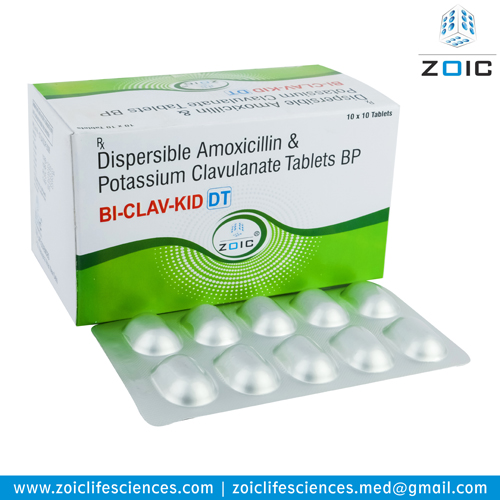
Bl-CLAV-KID DT
Amoxicillin 200 mg + Potassium Clavulanic Acid 28.5 mg
Amoxicillin 200 mg + Potassium Clavulanic Acid 28.5 mg belongs to the group of antibiotics that help in the treatment of bacterial infections. This offers a suitable result in offering treatment against the ear, nose, urinary tract, throat, skin, soft tissue, joints, bone, and respiratory tract. Under the circumstance of bacterial infection, the body losses its strength to fight infection as the bacteria grow in a huge amount.
The works of Amoxicillin 200 mg + Potassium Clavulanic Acid 28.5 mg are noticed when it starts killing the bacteria cells. It forms a protective layer on the cells and prevents their leakage. The combination decreases the resistance of bacteria count and permanently cuts off their DNA production. It reduces the protein intake of bacteria which offers protection against the infection.
There are some important precautions that are necessary and required with the consumption of this Amoxicillin 200 mg + Potassium Clavulanic Acid 28.5 mg salt, this will benefit the person with the maintenance of health. Take the dose in a limited quantity, and avoid the use of medicine if it causes any serious skin allergies. There are some side effects that may occur with the regular intake such as nausea, vomiting, drowsiness, etc.
Uses of Amoxicillin 200 mg + Potassium Clavulanic Acid 28.5 mg
The beneficial use of salt is mentioned below. Kindly use the precautions for the best and most appropriate results.
- This reduces bacterial infection of the ear.
- It is beneficial during the intake of bacterial infection caused in the nose.
- This also offers treatment against the urinary tract.
- It is provided beneficial results against bacterial infections of the throat
- This is also recommended against bacterial infection of the skin and soft tissue,
- It can be taken during the bacterial infection of joints and bones.
- This is recommended for respiratory tract infections.
- It reduces the protein count of bacteria.
Precaution with Amoxicillin 200 mg + Potassium Clavulanic Acid 28.5 mg
The important precaution with the use is mentioned below.
- Take the medicine on time.
- Try to avoid the intake of alcohol.
- It is necessary to take the medicine on time.
- That is not recommended for the pregnant woman.
Side Effects of Amoxicillin 200 mg + Potassium Clavulanic Acid 28.5 mg
The common side effects of the aid are,
- Nausea
- Digestive issue
- Vomiting
- Drowsiness
Storage- Keep the Amoxicillin 200 mg + Potassium Clavulanic Acid 28.5 mg salt tablets stored in a cool and dry place.
Note- This Amoxicillin 200 mg + Potassium Clavulanic Acid 28.5 mg salt is for external use




| packagingsize | 10×10 |
|---|---|
| packagingtype | alu-alu |